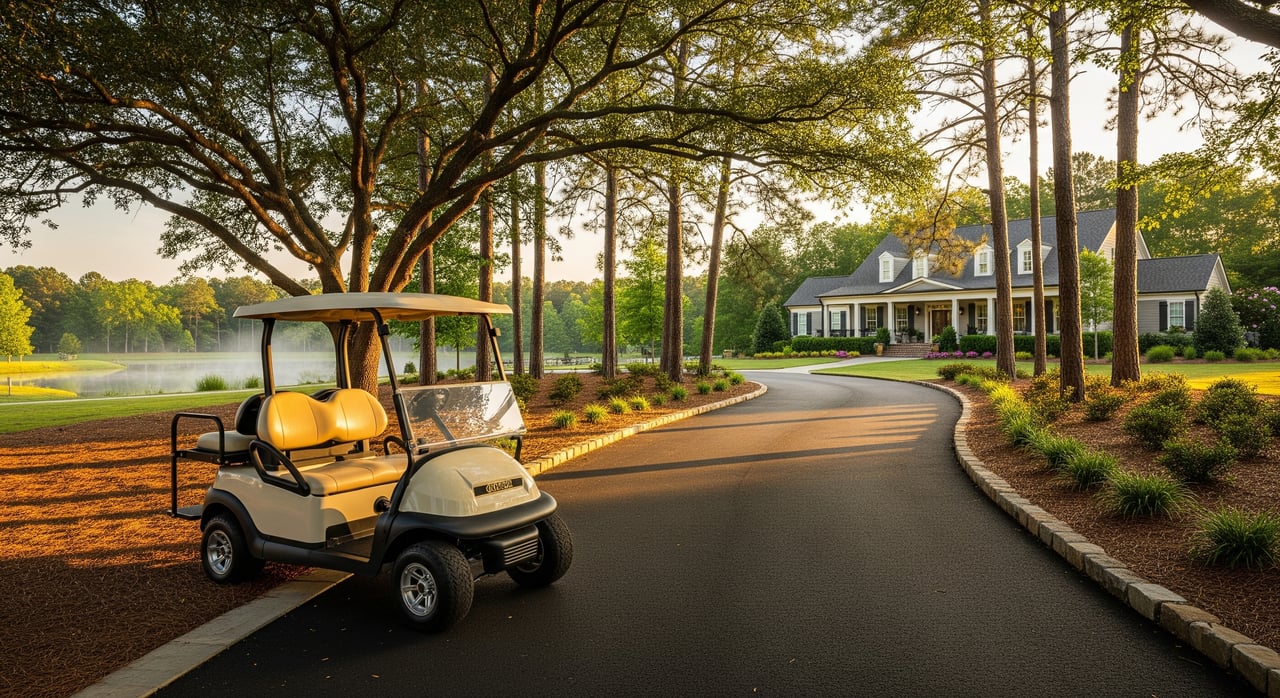
Thinking about trading short car trips for breezy golf-cart rides? If you’re exploring Peachtree City, you’ve likely heard about the town’s beloved multi-use path network and the lifestyle that comes with it. It can be a game changer for daily routines, from school drop-offs to sunset cruises around the lakes. In this guide, you’ll learn how the path system works, what “path-adjacent” really means, how to search for the right home, and what to know about safety, rules, and resale. Let’s dive in.
What makes the path system special
Peachtree City’s paths form an intentional, connected network designed for golf carts, walkers, runners, and cyclists. You’ll find roughly 100 miles of paved routes that link neighborhoods to lakes, parks, schools, shopping, and civic spaces. Many paths run along greenways and around lakes, so trips feel relaxed and scenic.
The system acts like a second, local transportation grid that reduces short car trips. Because the routing is often direct and parking is simple, many residents find a cart ride can match or beat the time of a short drive. This is a big part of Peachtree City’s identity and why families often ask for homes with direct path access.
How you will use the paths
Everyday trips
- Quick errands to grocery stores, pharmacies, and restaurants.
- School drop-off and pick-up for nearby elementary and middle schools.
- Evening rides to parks, ballfields, and community events.
- Low-stress visits to friends in nearby neighborhoods.
Typical destinations
- Shopping centers and neighborhood retail for daily needs.
- The municipal complex, library, community centers, and ballfields.
- Lakeside loops and greenways for exercise and family time.
- Schools that are reachable by cart from certain neighborhoods, depending on routes and crossings.
Timing and safety habits
Families often plan 5 to 15 minute cart trips for local errands. Younger riders are typically supervised, and most people favor daylight routes. At night, residents rely on cart lights and reflective gear to stay visible.
What “path-adjacent” really means
When you see a listing described as path-adjacent, it usually falls into one of these categories:
- Direct access at the lot line: The yard or a gated opening touches a path so you can roll right out.
- Very short cart distance: The home sits within roughly a quarter to half a mile of a main connector or loop.
- Built-in cart features: A cart garage, charging area, or dedicated parking that supports daily use.
Path adjacency is about more than convenience. It can shape your daily rhythm, how you socialize, and even how your kids get to activities. It can also influence long-term resale appeal for buyers who want the cart lifestyle.
Where to look in Peachtree City
Path placement follows clear patterns. If you want the highest chance of easy access, focus on these areas:
- Lakeside neighborhoods: Many lots back onto paths that circle the lakes and greenways.
- Village and shopping centers: The areas around major retail nodes and the municipal complex often have dense path connectivity feeding them.
- Older, centrally planned neighborhoods: These tend to have more direct path links compared to some newer outlying subdivisions.
If privacy matters, note that homes along busier stretches can see steady cart and pedestrian traffic. Strategic landscaping, fencing, and orientation can balance convenience with a sense of seclusion.
Smart search steps that work
Use a methodical approach to confirm the access you want.
- Overlay official path maps with MLS listings: Line up the city’s path map with property maps to spot direct adjacency.
- Leverage parcel and GIS tools: County parcel maps can show how close a lot sits to a connector and clarify any easements.
- Use MLS keywords carefully: Try terms like “golf cart path,” “cart friendly,” “cart garage,” or “lake path access,” then verify in person.
- Check satellite and street view: Confirm the path’s exact alignment relative to the yard, fences, and gates.
- Verify with the listing agent or HOA: Ask about cart rules, approved access points, storage expectations, and anything required for gates or openings.
- Tour by cart: A quick neighborhood ride reveals practical routes to schools, shopping, parks, and tricky crossings you might miss by car.
Features to prioritize in a cart-friendly home
Your daily experience improves when the property is set up for carts from day one.
- Garage or storage: Look for a cart bay, extra-deep garage stall, or covered parking with security.
- Charging access: A dedicated outlet or charging setup in a safe, ventilated space for electric carts.
- Yard access: A gate or clear path exit so you do not need to lift or maneuver around obstacles.
- Surface and slope: Smooth transitions and gentle grades from storage to the path.
- Privacy and orientation: Patios and porches that face the path can be social and lively; plan for screening if you prefer quiet.
- HOA and covenants: Review rules for cart parking, path access, fencing, and any architectural approvals.
Lifestyle tradeoffs and market factors
Many buyers are willing to pay a premium for true path adjacency or lakefront path access. The size of that premium varies by neighborhood and demand. If you value privacy, target lots on quieter connectors rather than main loops.
Resale can benefit from path access, especially for buyers prioritizing the cart lifestyle. On the other hand, homes along high-traffic sections can feel busy. Your agent should help you compare recent sales of path-adjacent and non-adjacent homes within the same subdivision so you can calibrate value and long-term appeal.
Rules, safety, and etiquette overview
Peachtree City sets local rules for cart operation, registration, lighting, age limits, and speed. State rules can also apply to certain roads. Always review the latest guidance from the city and the police department before purchasing a cart or planning routes.
At street crossings, evaluate sight lines, signage, and traffic patterns. At night, rely on proper cart lighting and reflective gear. Follow manufacturer guidance for seating and safety, supervise minors, and remember that carts share space with walkers, runners, and cyclists. Courtesy is simple and effective: pass single file, slow around pedestrians, yield as posted, and signal when overtaking.
Maintenance responsibilities for paths can vary. The city typically maintains main corridors, while some internal connectors belong to HOAs or private communities. Confirm who maintains the path behind or near a property so you understand upkeep, noise, and any access rules. In heavy rain or rare ice events, plan around temporary debris or closures.
Insurance is another practical point. Standard homeowners coverage may not include cart incidents by default, so check with your insurer about liability and damage options that fit your use.
Try a “day in the life”
Picture a weekday where you skip two car trips without losing time. You roll out from your garage in the morning, take a direct path to school, then swing by a nearby shopping center for coffee and a few groceries before heading home. In the afternoon, you cart to the library or a ballfield without worrying about parking or traffic. After dinner, a lakeside loop offers a low-stress spin with great views.
This is the rhythm many families seek. With the right home and safe routes, the path system becomes part of your routine rather than a weekend novelty.
How to compare two path-friendly homes
Use a simple checklist to keep decisions clear:
- Access: Direct path opening versus a short cart ride to a connector.
- Features: Cart garage or bay, charging, and weather protection.
- Route quality: Number and type of street crossings, sight lines, and lighting.
- Noise and privacy: Traffic level on the adjoining path segment.
- Rules and fees: HOA guidance on storage, gates, and path use.
- Resale: Recent sales for similar homes with and without path access in the same area.
Your next step
If you want a daily cart lifestyle, the details matter. You will want the right mix of direct access, storage and charging, safe crossings, and a neighborhood that fits your routine. A careful search, quick verification of path adjacency, and a hands-on cart tour will help you make a confident choice.
When you are ready to explore homes along Peachtree City’s paths, reach out. I will help you compare options, confirm access, and prioritize features that fit your family’s day-to-day life. Start the conversation with Kenna Daws.
FAQs
Can I drive a golf cart on all roads in Peachtree City?
- No. Carts use the multi-use path network and selected local roads. They are not allowed on all state or high-speed roads. Review the city’s rules for exact routing.
Do most homes include a golf cart with the sale?
- No. Carts are usually a separate purchase. Sometimes a seller offers a cart, but it is not standard and should be verified in writing.
Will my kids be able to cart to school from our neighborhood?
- Possibly. Many elementary and middle schools are reachable by cart from nearby areas, but it depends on your specific route and crossings. Walk or cart the route in person to assess safety.
Does being path-adjacent increase a home’s price?
- Often. Many buyers pay a premium for direct path or lake loop access. The exact premium varies by neighborhood, demand, and comparable sales.
What should I look for in a cart-friendly garage or bay?
- Enough depth and clearance, a safe charging outlet for an electric cart, and easy access to the yard or path. Covered storage helps with weather and security.
Who maintains the path behind a property?
- It depends. The city typically maintains main corridors, while HOAs or private communities may maintain internal connectors. Confirm maintenance responsibilities during due diligence.
What are the basic safety and etiquette tips for the paths?
- Use lights at night, wear reflective gear, supervise younger riders, yield to pedestrians, slow at crossings, and signal when passing. Follow posted rules and speed limits.